 Rockville MD
Rockville, MD · Sewer & Mains
Trenchless Pipe Lining in Rockville, MD: Fix a Failed Sewer Without Digging Up the Yard
The reason people search for this is almost never the pipe. It is the driveway, the mature planting, the patio that went in two years ago, or the parking that a business cannot lose for a week.
Trenchless rehabilitation rebuilds a pipe from the inside, through existing access points, so most of what is above it stays where it is. It is not right for every line, and this page is as much about when it is not.
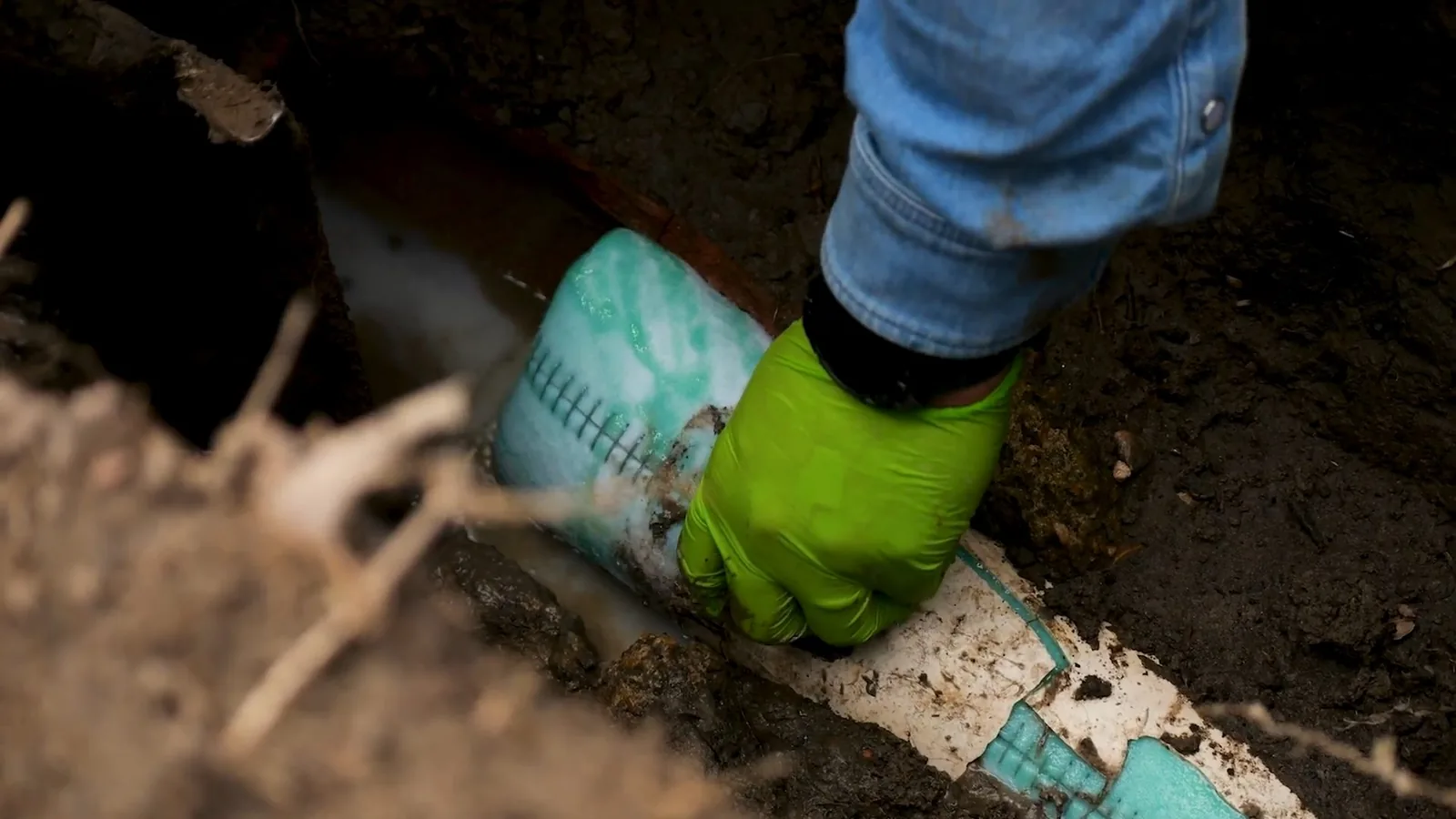
What lining a pipe actually involves
A resin-saturated liner is drawn or inverted into the existing pipe, pressed against the inside wall, and cured in place. What you end up with is a new pipe formed inside the old one, jointless through the lined length.
Because it goes in through existing access, the work above ground is usually limited to the access points rather than the whole run. That is the entire value proposition, and it is why the question is always whether the host pipe is suitable.
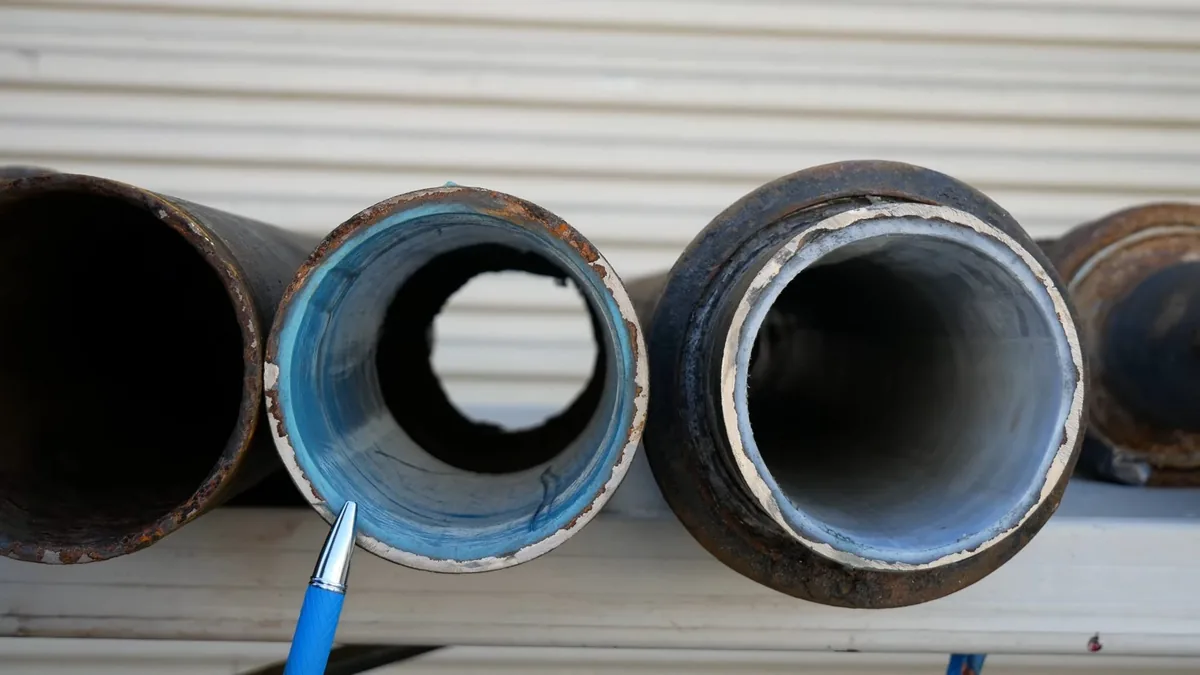
Trenchless against open-trench, honestly compared
Both have their place and the right answer depends on the pipe, not on which method sounds more modern. The comparison that matters is below.
| Trenchless lining | Open-trench replacement | |
|---|---|---|
| Surface disruption | Access points only | The full length of the run |
| Typical duration | Often a single day | Several days plus reinstatement |
| Needs the old pipe intact | Yes, it lines the host pipe | No, it replaces it |
| Handles a collapsed line | No | Yes |
| Handles a severe sag | No, it lines the sag in place | Yes, the fall can be corrected |
| Reinstating what was above | Little to reinstate | Driveway, planting and paving |
When lining is the wrong answer
This is the part that tends to go unsaid. A liner follows the shape of the pipe it is installed into, so it inherits that pipe's geometry along with its length.
If the line has a belly holding standing water, lining it produces a smooth new pipe with the same belly. If a section has collapsed, there is nothing left to line against. If the fall is wrong, lining will not correct it. In those cases excavation is not the salesman's option, it is the only one that fixes the problem.
- A collapsed or crushed section: excavation
- A significant sag holding water: excavation, so the fall can be corrected
- Offset joints beyond the liner's tolerance: usually excavation
- Roots through otherwise sound pipe: a good lining candidate
- Cracked or corroded but intact pipe with correct fall: a good lining candidate
The survey that has to come first
Nobody can quote this work honestly without seeing inside the pipe, and a quote offered without a survey is a guess with your garden attached to it.
The survey establishes the material, the condition, the position and depth of the faults, and whether the fall is correct. It also tells you where the fault sits relative to the property boundary, which decides whose problem it is before anyone commits to a method.
Access pits, curing time and the day itself
Most residential jobs work through an existing cleanout and one small access pit. The pipe is cleaned first, because a liner will not bond to a wall coated in grease or roots, and that cleaning is often jetting work in its own right.
Then the liner goes in and cures. You are without drainage for that period, which is the main practical constraint and the thing worth planning around in a household or a business.
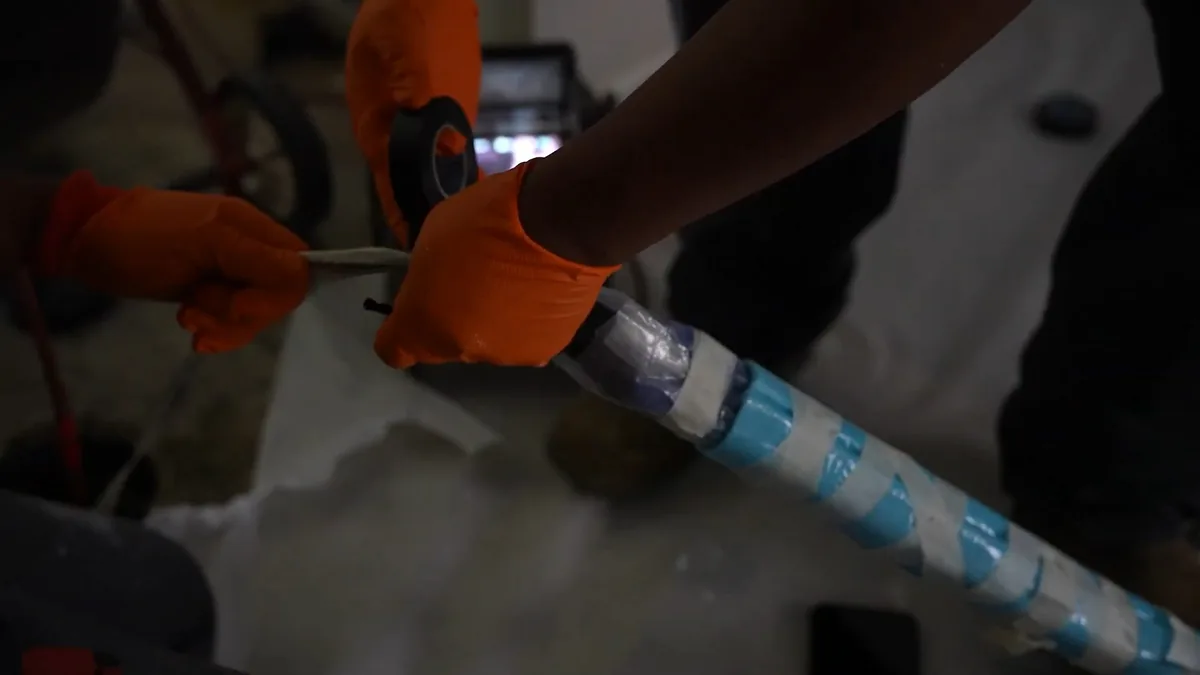
Liners, lifespans and the cost of not digging
Can any sewer line be lined?
No, and anyone who says otherwise has not looked inside yours. Lining needs a host pipe that is still structurally there and has the correct fall.
Collapsed sections, significant sags and badly offset joints are excavation jobs. A camera survey is what tells you which you have.
How long does the property have no drainage?
For a typical residential lateral, a working day, covering cleaning, lining and curing. We will give you the window before the day rather than on it.
For commercial premises it is worth scheduling around trading hours, and that is usually possible with notice.
Does it cost less than digging?
Often, once reinstatement is counted, and that is the comparison people miss. The lining itself is not always the lower figure, but replacing a driveway or mature planting frequently costs more than the pipe work did.
The cost guide sets out the range for lining. We give you both options with figures where both are genuinely available.
How long does a liner last?
Manufacturers quote design lives measured in decades, and the liner is a new pipe inside the old one rather than a patch, so it is not a temporary measure.
What governs the real answer is the host pipe and the install. A liner cured properly in a line that was surveyed first is a long-term repair; one pulled through a badly deformed pipe is not, which is why we decline some of them.
Where lining fits: after the camera survey, next to jetting
Trenchless is a method rather than a diagnosis, so it follows a camera survey done as part of sewer line work. Where the line is sound but choked, cleaning it with hydro jetting is the lower-cost answer and lining would be an expensive way to solve a maintenance problem.
The same no-dig thinking applies to a buried supply line that keeps failing, where rerouting rather than breaking out concrete is often the better move, which is covered under slab leak work.
Covered ZIPs: 20850, 20851, 20852, 20853 · Full service area
Told you need the garden dug up?
Get a camera survey before you agree to an excavation. If the line can be lined, you will know, and if it cannot, you will know that too.