 Rockville MD
Rockville, MD · Drainage
Hydro Jetting in Rockville, MD: When It Beats a Cable and When It Does Not
Jetting is not a stronger version of running a cable. It does a different job, and the distinction decides whether it is worth paying for.
A cable cuts a hole through a blockage. Water at pressure strips the inside of the pipe back toward its original diameter and flushes what it removes out of the system. If your problem is one blockage, the cable is usually the better buy. If your problem is that the same line keeps closing up, the cable has been treating a symptom.
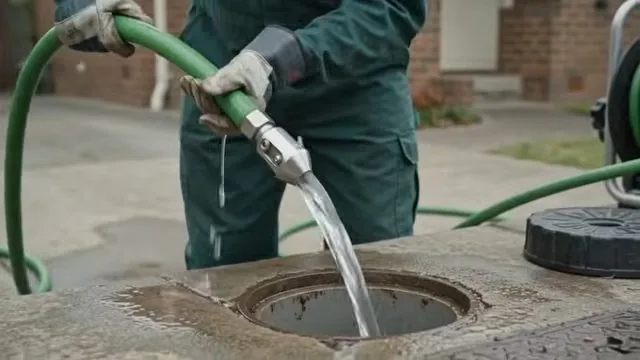
Cabling against jetting, and which one your line needs
Both have a place, and the wrong choice is expensive in different directions. This is roughly how we decide.
The useful question is not which is more powerful. It is whether the pipe is blocked or narrowed. Blocked wants a cable, narrowed wants jetting, and failed wants neither.
| What you are dealing with | Usually the right tool | Why |
|---|---|---|
| One fixture blocked, first time | Cable | Quicker, lower in cost, and it reaches the obstruction directly |
| Soft build up narrowing a line over years | Jetting | Pressure takes the wall back; a cable only punches through |
| Grease in a kitchen or commercial line | Jetting | Grease recoats behind a cable almost immediately |
| Roots at a joint | Both, in order | Cut first, then flush the debris out rather than leaving it |
| Pipe cracked, offset or collapsed | Neither | Cleaning cannot repair structure; this needs the camera and a repair plan |
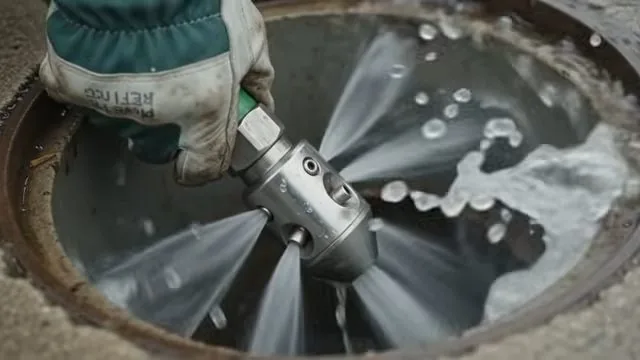
What the pressure is actually doing in there
A jetter puts water down a hose to a nozzle that sends most of it backwards as jets and a little forwards. The backward jets do two things at once: they pull the hose up the pipe, and they scour the wall as they pass.
That is why the hose goes in past the blockage and the cleaning happens on the way back. The debris travels downstream with the water rather than being pushed further into the system, which is the main practical difference from cabling.
Nozzle choice matters more than the headline pressure figure. A penetrating nozzle opens a path through a solid obstruction, a flushing nozzle moves volume and carries debris, and a rotating nozzle is for hard deposits on the pipe wall. Matching the nozzle to the deposit, and the pressure and flow to the pipe, is the skill in it. More pressure into the wrong pipe is how you cause damage rather than clear it.
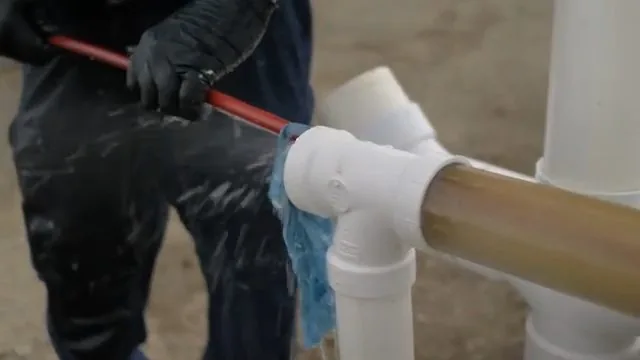
Grease, and why the kitchen line closes up again
Grease is the classic jetting job, and it behaves in a way that makes cabling look successful for about a fortnight.
It leaves the tap warm and liquid, then cools and sets on the pipe wall a little further along. Each wash adds a layer. By the time the drain is slow, the pipe has a lining of it, and a cable bored through the middle restores flow through a hole in a pipe that is still mostly full. That is why the gap between clearances gets shorter each time.
Pressure takes the layer off the wall rather than through it, and the flushing stage carries it out of the system instead of leaving it sitting in the line. After a proper jet, the gap before the next problem is measured in years rather than weeks, assuming nothing is still feeding it.
- A kitchen drain that gets slow at the same interval after each clearance
- A sink that drains fine alone but backs up when the dishwasher runs
- A smell from the drain between uses, which usually means a coated wall
- Two fixtures on the same branch slowing together
Pipes we will not jet, and why that is in your interest
Jetting is not safe in every pipe, and this is the part of the service worth being direct about. High pressure water finds weakness, and in a line that has already lost integrity it can turn a narrowing problem into an open one.
So we look before we jet. Where the camera shows a cracked, offset or badly deteriorated section, jetting that section is the wrong move and we will say so, even though it is the service you called about. The answer there is a repair plan, and jetting may still have a role later as the cleaning step before lining.
Age on its own is not disqualifying, and we do not assume a pipe is fragile because the house is old. What matters is the condition in front of the camera on the day, which is a different question from the property's age.
The camera before, and the camera after
Jetting without a camera is paying for a result nobody looked at. We run it twice for different reasons.
Before, it answers whether jetting is appropriate at all, finds the access point, shows what the deposit actually is, and catches structural problems that would change the plan entirely. That inspection is the step that stops the wrong service being sold.
Afterwards it is proof. You can see the pipe wall, whether it came back to something like full diameter, and whether anything was underneath the deposit that was hidden before. On a repeat problem that second look is the whole point, because it answers whether cleaning was ever going to be enough.
On a main that keeps backing up, the city's own planning treats the repetition as a sign of a defective section rather than bad luck. The camera after jetting is how you tell whether that is what you have, or whether the build up was the whole story.
Restaurants, managed buildings and scheduled jetting
Commercial kitchens are where jetting stops being a repair and becomes maintenance. A line carrying food waste and grease all day will coat again, and the question is whether that happens on a schedule you chose or during service on a Friday night.
For managed property the same logic applies to any shared line with a history. A planned visit at a known interval, with the camera footage kept, costs less than the same work done as an emergency and gives the managing agent something to show when a tenant reports a recurring problem.
Interval depends on the line and the volume rather than a standard number, which is why we set it from what the camera shows after the first clean rather than quoting a frequency before we have seen it.
Is jetting safe, and is it worth it?
Is hydro jetting going to damage my pipes?
Not in a sound pipe with the pressure and nozzle matched to it. That matching is the skill, and it is why pressure figures on their own are not a selling point.
In a pipe that has already cracked or shifted, jetting can make things worse, which is exactly why we camera the line first and will decline to jet a section that is not up to it.
I had the drain cabled last month and it is slow again. Why?
Because a cable clears a path through a deposit rather than removing it. If the pipe wall is coated, flow is restored through a hole in a line that is still mostly full, and it closes up again.
A shortening gap between clearances is the clearest sign that the problem is build up rather than a one off blockage, and that is the case where jetting is worth the extra cost.
Do you need to dig anything up?
No. Jetting works through an existing access point, normally an exterior cleanout, so nothing is excavated to do the cleaning itself.
If the camera finds a structural failure, that is a separate conversation, and even then lining can often avoid digging. Jetting itself is a no dig service.
How long does it take?
A straightforward residential line with good access is usually a few hours including both camera runs. Commercial lines and anything with difficult access take longer.
We would rather give you a realistic window after the first camera look than a flat figure on the phone, because access is the variable that moves it most.
Will jetting fix roots in my sewer line?
It clears them and flushes the debris out, which cabling alone does not do well. What it does not do is close the opening the roots came through.
Roots enter at a joint or a crack, so they come back to the same place. Jetting buys time and a clean camera view; the lasting answer is lining or sewer repair at that point.
Jetting, clearing and repair are three different jobs
If a drain is blocked right now and this is the first time, drain cleaning is the page you want. Cabling clears most one off blockages faster and for less, and jetting is the step up for build up and repeats rather than the default first visit.
Where the camera shows the pipe itself has failed, no cleaning method fixes that. A broken or displaced main goes to repairing the main line, and where it can be fixed from the inside instead it goes to relining from the inside. Jetting is often the preparation step for lining rather than an alternative to it.
Covered ZIPs: 20850, 20851, 20852, 20853 · Full service area
Same line blocking again after it was cleared?
Hydro jetting services Rockville, MD begin with a question: tell us how many times and how long between them. The pattern usually tells us whether jetting is the answer or whether something structural is.