 Rockville MD
Rockville, MD · Water Heating
Tankless Water Heater Service in Rockville, MD: Fault Codes, Flow Sizing and Conversions
Most of our tankless work is maintenance rather than installation, and the call data says the same thing: flushing and descaling is the single biggest reason people ring about these units.
That is worth leading with, because a tankless heater that is losing temperature or cutting out mid shower is more often scaled than broken, and those are very different bills.
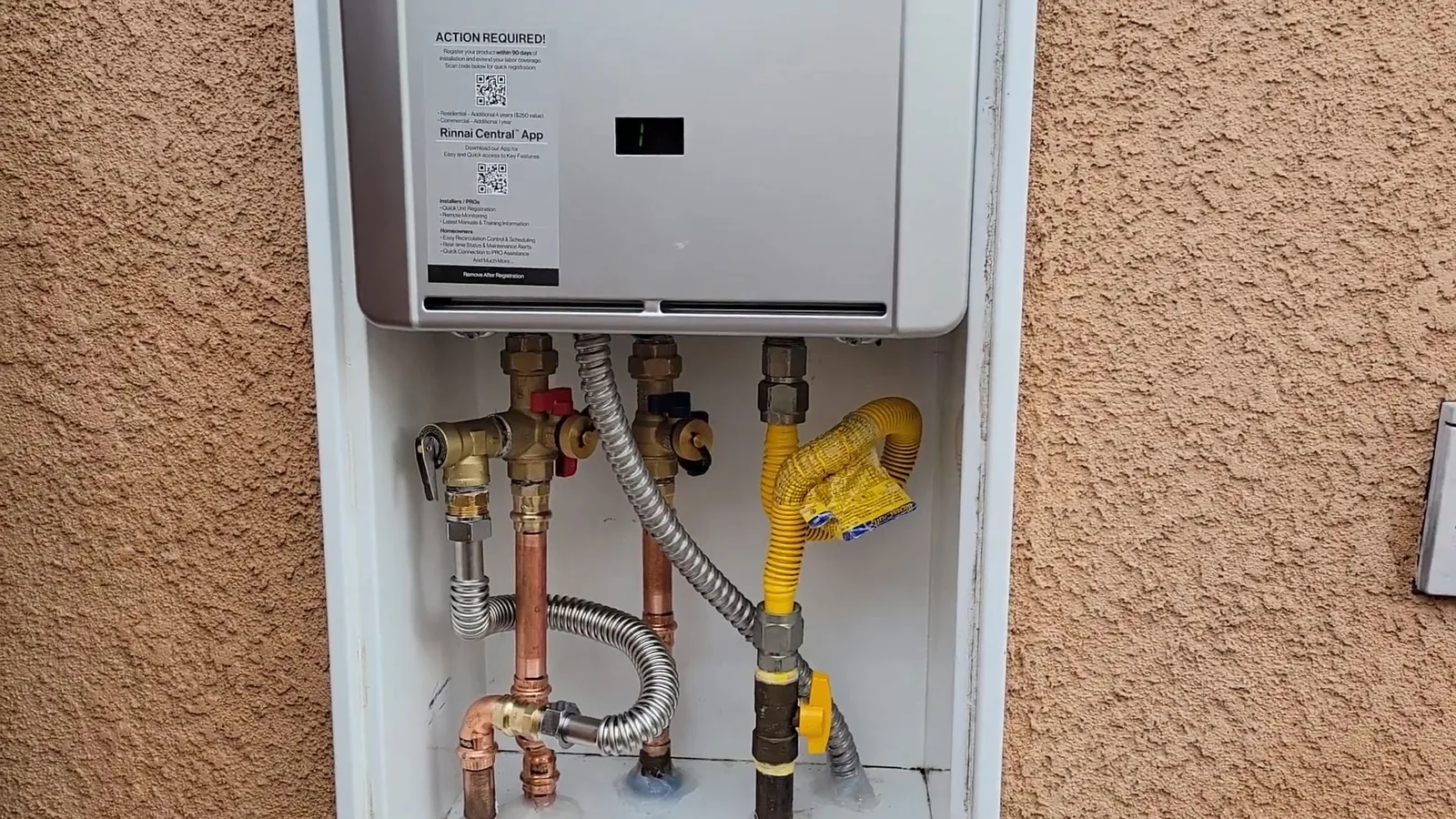
Descaling is most of what these units actually need
A tankless heater fires only when water flows, and it heats that water as it passes through a narrow heat exchanger. Anything the water leaves behind builds up in exactly the place that has to stay clear.
Scale does not usually announce itself as a failure. It shows up as slightly less hot water than last year, a temperature that wanders during a shower, or a longer wait at the tap. Sometimes it is a unit that throws a flow or temperature fault under heavy demand, then behaves normally afterwards.
- Isolate the unit and shut the gas or power at the appliance.
- Connect to the service ports and circulate a descaling solution through the heat exchanger.
- Flush clean, then clear the inlet screen, which is the part most often overlooked.
- Check the condensate run and trap on a condensing unit, since a blocked one causes faults that look electrical.
- Refire, run it up under real demand, and check the delivered temperature rather than the setpoint.
If the unit was fitted without isolation valves on the service ports, that is the first thing worth adding. It turns a descale from an awkward job into a routine one, and it pays for itself the second time.
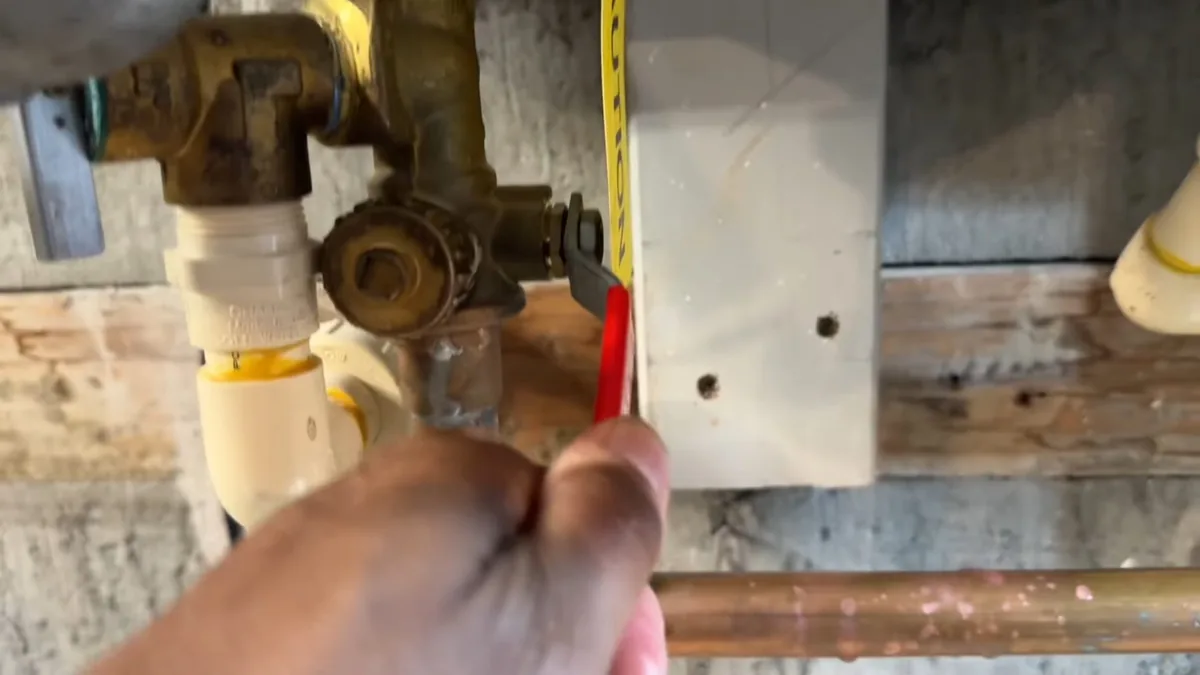
What moderately hard water does to a heat exchanger
WSSC reports Potomac River water averaging roughly 120 to 130 milligrams per litre of dissolved calcium and magnesium, which is about 7 to 7.6 grains per gallon. That is moderately hard rather than severe.
Moderately hard is an awkward middle. It is soft enough that people assume scale is not their problem, and hard enough that a heat exchanger accumulates it steadily over years. The difference from a tank unit matters. In a tank, deposits settle to the bottom where there is room for them. In a tankless unit they narrow the passage the water has to move through.
In practice that means annual descaling is a reasonable default here, and a unit running hot setpoints or heavy daily demand may want it more often. If yours has never been done and it is several years old, that is the first thing to look at rather than the last.
Fault codes, and why we ask for the make first
Tankless units self diagnose, and the code on the display is genuinely useful. What it is not is standard: the same number means different things on different brands, so the first question is always the make and model rather than the number alone.
Broadly the codes fall into four families, and each one points at a different part of the unit.
- Ignition and flame faults point at the gas supply, the igniter or combustion air
- Flow faults point at the sensor, the filter screen or scale
- Temperature faults point at the exchanger or a sensor that has drifted
- Venting and condensate faults are their own group and matter most on condensing units
Two of those we treat as stop using it rather than book it in. Anything pointing at combustion or venting gets looked at before the unit runs again, because a flue problem is a safety issue rather than a performance one. We will say that on the phone if the code you read out is in that group.
Sizing a tankless heater by flow in gallons per minute
A tank is sized in gallons, so the question is how much hot water you can use before it runs out. A tankless unit never runs out, so the question changes to how much it can heat at once.
That is measured in gallons per minute, and it depends on how cold the incoming water is. The same unit delivers noticeably less in February than in August, because it has further to lift the temperature. Sizing on a summer figure is the most common reason a correctly working unit disappoints its owner in winter.
So the honest sizing conversation is about simultaneous use. One shower and a kitchen tap is a different number from two showers and a washing machine, and it is worth being specific about the worst case your household actually creates rather than the average.
| What you want to run at once | What matters | Common outcome |
|---|---|---|
| One shower at a time | Winter inlet temperature | A single unit is usually comfortable |
| Two showers, or a shower and a bath fill | Simultaneous flow in gallons per minute | Needs sizing rather than assuming |
| Whole house plus appliances | Gas supply as much as the unit | Often the gas line decides the answer |
Gas supply and venting decide what a conversion really costs
The unit is rarely the expensive part of going tankless. The gas and the vent usually are.
A tankless heater fires at a much higher input than the tank it replaces, and it needs the gas line to deliver that at the appliance rather than just somewhere in the house. Pipe size, run length and what else is on the same line all feed into it. An existing line that served a tank perfectly well may still need upsizing. That is a real cost and it should be in the quote rather than discovered on the day.
Venting is the second half. These units vent differently from an atmospheric tank, and a condensing model also produces acidic condensate that needs a route to a drain and, in many cases, neutralising. Reusing an existing flue is sometimes possible and often not.
A gas appliance installation or replacement needs a WSSC Water permit, and an inspection by a WSSC plumbing inspector within ten business days of installation. The gas side is work for a master gasfitter licensee. We handle both as part of the job rather than leaving the paperwork with you.
Point of use and undersink units
Not every tankless job is a whole house unit. Small point of use heaters sit under a sink or near a single fixture. They solve a specific problem: a tap a long way from the heater, where you wait and waste water while hot water travels.
These are electric more often than gas, and the limiting factor is usually the circuit rather than the plumbing. A unit that will genuinely run a kitchen tap needs its own supply of the right rating, and a small undersink heater that shares a circuit with everything else in the kitchen will disappoint.
They are also a sensible answer for an outbuilding, a garage sink, or a cloakroom added a long way from the rest of the plumbing. What they are not is a substitute for a main heater, and we will say so if that is what is being hoped for.
When a tankless unit is the wrong answer
We fit these, service them, and like them, and they are still not always the right call. Three situations come up often enough to be worth saying plainly.
- The gas supply would need substantial upsizing and the household's hot water demand is modest anyway
- Nobody will descale it, because an unmaintained tankless unit in moderately hard water ends up worse off than a tank
- The replacement is urgent, there is no hot water today, and a like for like tank is available now
That last one is the honest trade. A tankless conversion is a planned job with permits, gas work and venting, and it does not fit well into an emergency. If you have no hot water tonight, a tank replacement is often the better decision, and a conversion can be the plan for next time.
Tankless FAQs: descaling frequency, cold slugs and conversions
How often does a tankless heater need descaling here?
Annually is a reasonable default for Rockville, where the supply runs about 7 to 7.6 grains per gallon. Heavy use or a high setpoint can justify doing it more often.
If yours has never been descaled and is more than a few years old, start there before assuming the unit is failing.
My unit goes cold for a few seconds mid shower. Is it broken?
Often not. A brief cold slug usually means the unit cycled off and back on because flow dropped below its firing threshold, from a partly closed valve, a clogged aerator or scale in the exchanger.
It can also be a fault in the flow sensor or the modulating valve. We check the simple causes first.
Can I convert from a tank to tankless without other work?
Sometimes, but plan for the gas line and the vent. A tankless unit fires at a much higher input than the tank it replaces, so the existing gas run may need upsizing.
A gas installation also needs a WSSC permit and an inspection within ten business days. We price the gas and vent work into the quote.
Does a tankless unit cost less to run?
It avoids standby losses, because it only heats water when you use it. Whether that pays back the higher installation cost depends on how much hot water your household uses.
For a modest household the saving is genuine but slow, and for a heavy one it is much more convincing.
Do you work on units you did not install?
Yes, and most of our tankless work is on units fitted by someone else. Tell us the make, the model and the fault code if it shows one.
If it was installed without service port isolation valves, we will usually suggest adding them, because it makes every future descale straightforward.
Tank units, and the rest of the hot water work
If your unit has a tank rather than being on demand, the repair work is on the tank heater repair page and replacements are on water heater installation. The two are kept separate from this page deliberately, because tankless faults and tank faults have very little in common beyond the hot water.
A unit that is leaking from its casing rather than faulting is usually a plumbing connection or a relief discharge rather than the heater itself. In that case leak locating is the faster route to an answer there.
Covered ZIPs: 20850, 20851, 20852, 20853 · Full service area
Tankless unit faulting, or due a descale?
For tankless water heater maintenance Rockville, MD, tell us the make and the fault code if it is showing one. That usually tells us whether this is a service visit or something larger.