 Rockville MD
Rockville, MD · Kitchen Plumbing
Garbage Disposal Repair in Rockville, MD: Humming, Silent or Wet, and Fitting Your Own
Disposal calls sort themselves into three groups within about ten seconds of the conversation starting, and they are genuinely different jobs.
A unit that hums is jammed. A unit that is silent has lost power or its motor has gone. A unit with water under it has a seal or a connection problem, and the question there is which one. Knowing which of the three you have tells you roughly what you are in for.
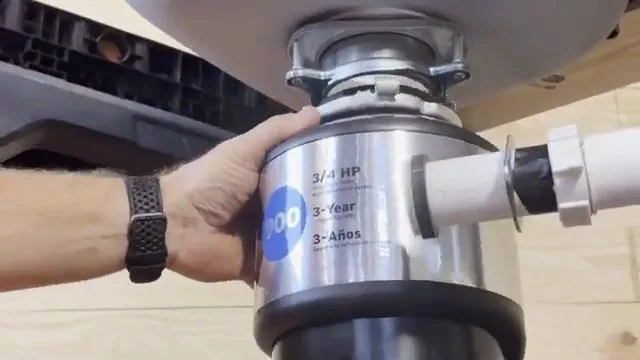
Humming, silent, or wet: three different problems
The sound the unit makes when you switch it on is the most useful piece of information you can give us, because each case points somewhere different.
- Hums but does not turn: the flywheel is jammed. The motor has power and something is stopping it. Often fixable in minutes
- Completely silent: either no power reaching it, a tripped internal overload, or a failed motor. The reset button is worth pressing before anything else
- Runs normally but water backs up in the sink: usually the drain line rather than the unit
- Runs and leaks: a seal, the mounting, or one of the two connections into it. Where the water appears tells us which
- Runs loudly or rattles: something hard is in there, or a mount has loosened
The reset button on the underside of the unit is worth knowing about before you call anyone. A disposal that overheats shuts itself off, and pressing that button brings a lot of apparently dead units straight back. If it trips again shortly after, that is a real fault rather than a one off overload.
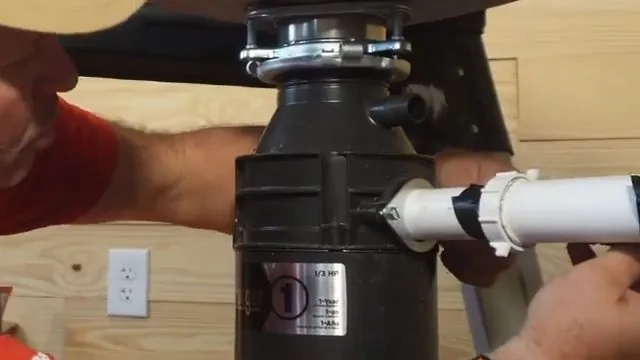
Water under the cabinet, and which seal it came from
A leaking disposal is really four possible leaks in one place, and they do not cost the same to fix. Where the water shows up narrows it quickly.
Water at the top, around the sink flange, means the mounting seal or the putty under the flange has failed. That is a reseal and remount rather than a new unit. Water at the side usually means the discharge tube connection or the dishwasher inlet, both of which are gaskets and fittings. Water from the bottom of the housing is the one that matters: that is the internal seal between the grinding chamber and the motor, and once that has gone the unit is not economically repairable.
| Where the water appears | Usual cause | What it means |
|---|---|---|
| Around the sink flange at the top | Mounting seal or flange putty | Reseal and remount, unit is fine |
| At the side where a pipe enters | Discharge gasket or dishwasher inlet | Gasket or fitting, inexpensive |
| Dripping from the base of the housing | Internal motor seal | Replace the unit |
Repair or replace, and what actually decides it
We will repair one where repairing makes sense, and say so where it does not. The deciding factors are fairly simple and worth knowing before anyone quotes.
A jam, a loose mount, a failed gasket, a stuck reset, or a dishwasher connection are all repairs, and usually quick ones. A leaking housing, a seized motor, or a unit that trips its overload repeatedly under normal use are replacements, because the parts that have failed cost more than the unit.
Age factors in mainly through parts availability rather than as a rule. An older unit with an inexpensive failure is still worth fixing. What we will not do is replace a working unit because it is old, or repair one where the repair costs most of a new one.
Fitting a disposal you have already bought: mounting checks
This is a common call and a perfectly sensible way to do it. People buy the disposal themselves, often because they want a specific model or horsepower, and want someone to fit it properly.
Two things are worth checking before the visit. First, whether the new unit uses the same mounting system as the old one, because a different system means the sink flange assembly changes too. Second, whether it is a different physical size, since a taller unit can foul the trap and need the waste rearranged.
If it is wired rather than plugged in, that is worth mentioning when you book. Some installations are on a cord and plug under the sink and some are hard wired, and the second takes longer.
- Isolate the power at the switch and at the breaker, and check it is dead at the unit.
- Disconnect the dishwasher inlet and the discharge tube, then take the weight before releasing the mount.
- Clean the sink flange seat properly, because most reseal failures start with a poor surface here.
- Fit the new mounting assembly, hang the unit, and align the discharge to the existing trap arm.
- Reconnect the dishwasher inlet, remove the inlet plug if the new unit has one fitted, and refit the discharge.
- Restore power, run water, and check every joint under load rather than just looking at it.
That fifth step catches people out on DIY fits. A new disposal ships with the dishwasher inlet blanked off, and if the plug is not knocked out the dishwasher will not drain. If it is knocked out when no dishwasher is connected, that is a leak.
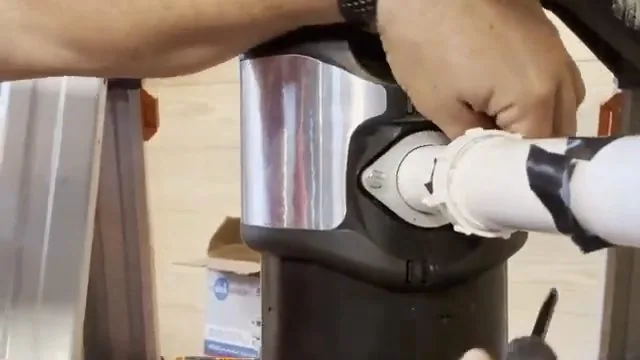
The dishwasher connection and the air gap
A surprising share of disposal calls turn out to be about the dishwasher, because the two share a connection and a fault in one looks like a fault in the other.
The dishwasher drains into the side of the disposal, so a disposal that is blocked or coated stops the dishwasher draining, and a disposal replaced without clearing the inlet plug does the same. Water appearing during a dishwasher cycle but not when the sink is used points firmly at that connection rather than at the sink waste.
If your setup has an air gap fitting on the worktop, that can also block and spill, which looks alarming and is usually a simple clean. It exists to stop waste water siphoning back into the dishwasher, so it is worth keeping rather than removing.
What a disposal will take, and what closes the line
Disposals do less than people think. The unit grinds, but the pipe downstream still has to carry what comes out of it, and most repeat kitchen blockages are about that second part.
The things that cause trouble are not always the obvious ones. Fibrous waste wraps rather than grinds. Starchy waste turns into a paste that sets further down the line. Coffee grounds and eggshells pass the unit easily and then settle. Fat and oil leave as liquid and solidify in the pipe, which is the single most common reason a kitchen line narrows over the years.
Running cold water while the unit works, and for a few seconds after, moves what it produces properly into the line rather than leaving it at the top of the pipe. That one habit prevents more blockages than anything else we could suggest.
Humming disposal: switch off at the wall, then try the hex wrench
My disposal just hums. Can I fix that myself?
Often yes. Switch it off at the wall, and never put a hand inside it. Most units take a hex wrench in a socket on the underside, which lets you turn the flywheel back and forth to release whatever is wedged.
If it frees and runs normally, you are done. If it hums again or trips the reset, something is damaged rather than jammed.
Water is dripping under the sink. Is the disposal finished?
Not necessarily, and the location tells you. Water around the top flange or at a side connection is a seal or gasket, which is a repair.
Water dripping from the bottom of the body is the internal motor seal, and that one means replacement.
Can you fit a disposal I bought myself?
Yes, that is a common job. Tell us the make and model when booking, and whether the old one was plugged in or hard wired.
Check the new unit is not significantly taller than the old one, since that can mean rearranging the waste pipe.
My dishwasher stopped draining after the disposal was replaced. Why?
Almost certainly the inlet plug. New disposals come with the dishwasher connection blanked off, and it has to be knocked out when a dishwasher is connected.
It is a two minute fix once identified. If it was not that, check the drain hose routing and the air gap.
Is a more powerful unit worth it?
Usually a modest step up is, and the top of the range often is not. More horsepower helps with volume and with jamming less, which matters in a busy kitchen.
What it does not change is what the pipe downstream will carry. If your kitchen line keeps closing up, clearing the kitchen line will help and a bigger disposal will not.
When it turns out not to be the disposal
A disposal that runs properly but will not drain is usually telling you about the pipe rather than the unit. If the branch or the kitchen line is the problem, that is clearing the branch line, and where a kitchen line keeps closing up from grease it is often jetting rather than another clearance.
Water appearing under the sink is not always the disposal either. Supply stops, the tap tailpieces and the trap all fail in the same cupboard, and those are on tap and trap repairs.
Covered ZIPs: 20850, 20851, 20852, 20853 · Full service area
Disposal humming, silent, or leaking under the cabinet?
Need garbage disposal repair & installation Rockville, MD? Tell us which of those three it is doing. That one answer usually decides whether this is a quick fix or a replacement.