 Rockville MD
Rockville, MD · Bathroom Fixtures
Bathroom Plumbing in Rockville, MD: Pan Leaks, Wet-Space Repairs and Fixture Rough-Ins
Most calls about this work start in the room below the bathroom. A brown ring on the ceiling, a bulge in the paint, a drip from a light fitting.
A bathroom has three ways of getting water where it should not go, and they need different repairs. Finding out which one you have takes a few simple tests, and it decides whether the job is a morning or a week.
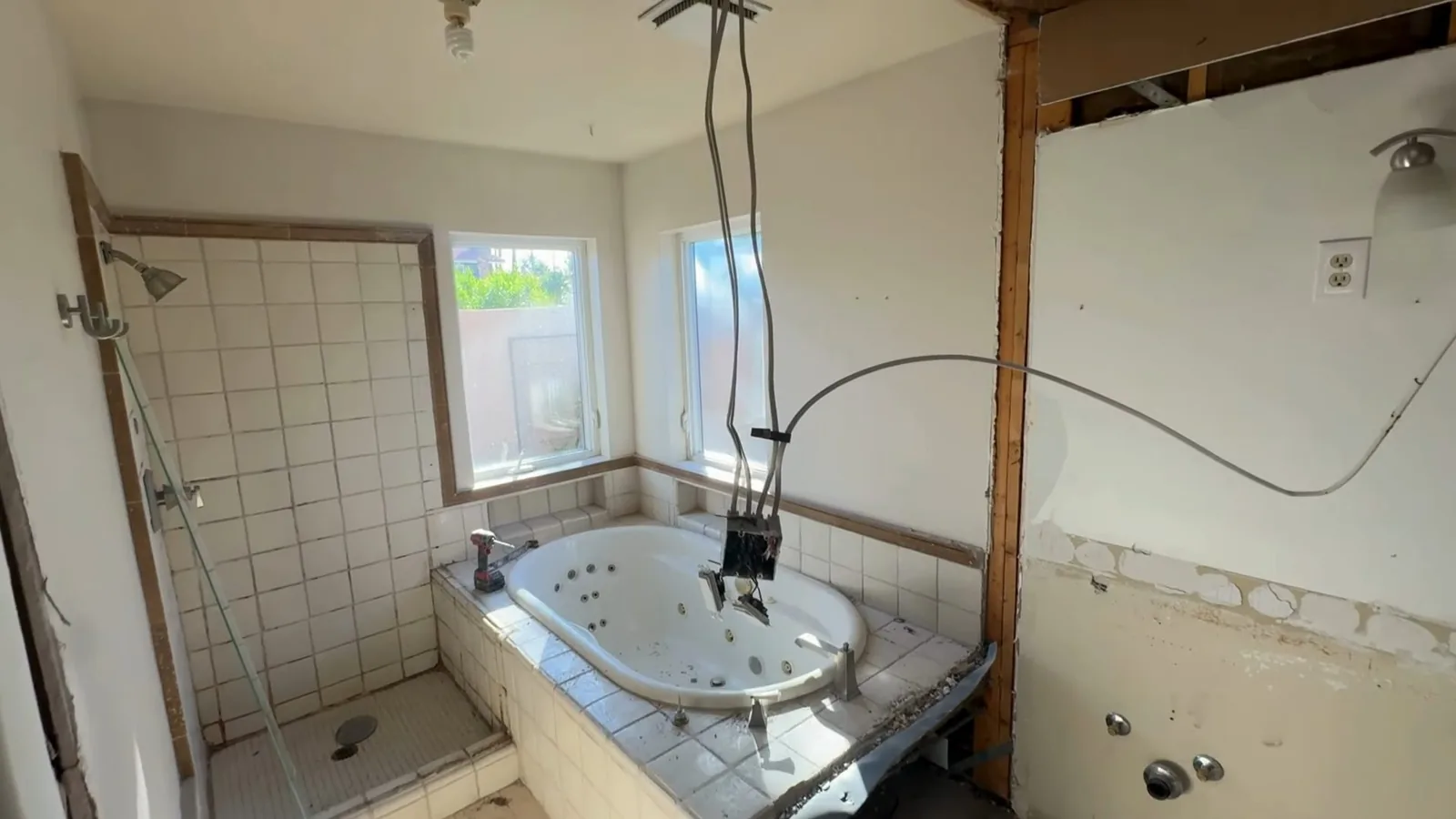
A ceiling stain under the bathroom: pan, surround or pipe
Each of the three sources only leaks under certain conditions, and that is what we use to tell them apart. You can do most of it yourself with a towel and ten minutes.
The last row is the one not to sit on. Supply pipes stay under pressure whether or not anything is in use, so a leak there keeps going while the house sleeps. If you are unsure, shut the bathroom's isolation valves overnight and see whether the stain still darkens.
| When the stain grows | Most likely source | What it usually means |
|---|---|---|
| Only while the shower runs, even aimed at the floor | The shower pan or the drain connection under it | A pan or drain repair, from below or by lifting the floor |
| Only when water hits the walls or the door | Grout, caulk or a gap at the screen or curtain line | Often a reseal, sometimes regrouting |
| When the tub drains, not while it fills | The tub waste and overflow fitting | A gasket or waste assembly, usually reachable |
| All the time, even with nothing in use | A supply pipe or the valve behind the wall | Pressurised, so it needs looking at soon |
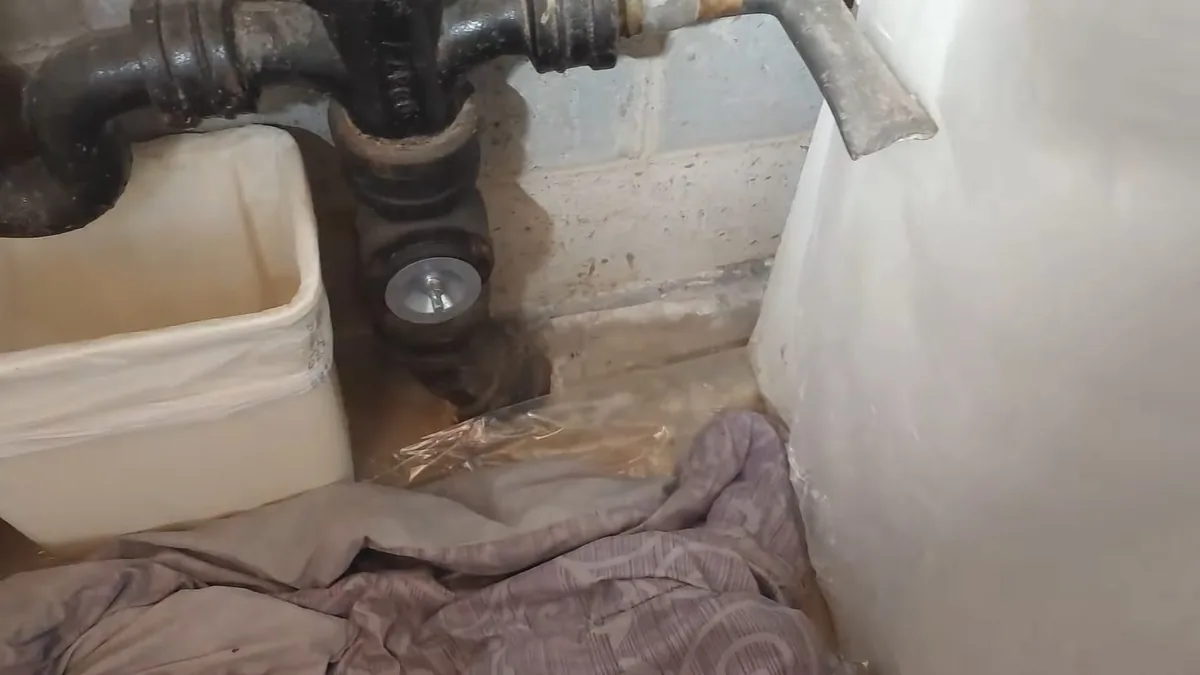
Shower pans, and why that leak only shows when the shower runs
Under the tile of a built shower sits a waterproof pan or liner that sends any water getting through the grout back to the drain. Tile and grout are not waterproof on their own, so the liner is doing the real work.
When it fails, it is usually at the drain, where the liner is clamped between two parts of the drain body. The other weak point is a corner where it was folded and cut. Water then escapes around the drain rather than into it, and you only see it during a shower because that is the only time it is wet.
The test is a flood test: plug the drain, fill the floor of the shower to just below the curb, mark the level and wait. A level that drops means the pan is losing water. A level that holds sends us back to the walls and the door.
The honest news about a failed pan is that it rarely repairs from above. Coatings applied over the tile can buy time, but a liner that has failed underneath usually means lifting the shower floor, replacing the liner and relaying it. We will say which you are looking at before quoting either.
Replacing the valve inside the wall
The cartridge in a shower or tub valve is a front of wall part, and swapping it is covered on our faucet and sink page. This section is about the valve body itself: the brass fitting soldered or crimped onto the pipes, buried behind the tile.
That body gets replaced when it is cracked, when parts for it are no longer made, or when someone wants a different trim that will not fit the old one. The question that decides the cost is access. If there is a closet, a hallway or a panel on the other side of the wall, we can often work from there and leave the tile alone.
Where there is no back access, the work comes through the front, and the opening is sized to the valve rather than to the whole wall. A larger trim plate can sometimes cover the opening afterwards, which is worth knowing before you choose one.
- Modern codes call for a shower valve that guards against sudden temperature swings, either pressure balancing or thermostatic
- Replacing a very old two handle valve with a single control valve is a common reason for this work
- Valve depth matters: it has to suit the finished wall thickness, tile included, or the trim will not seat
- Shut off stops behind the access panel make every future service visit far easier
Rough-ins for a new shower, tub or vanity
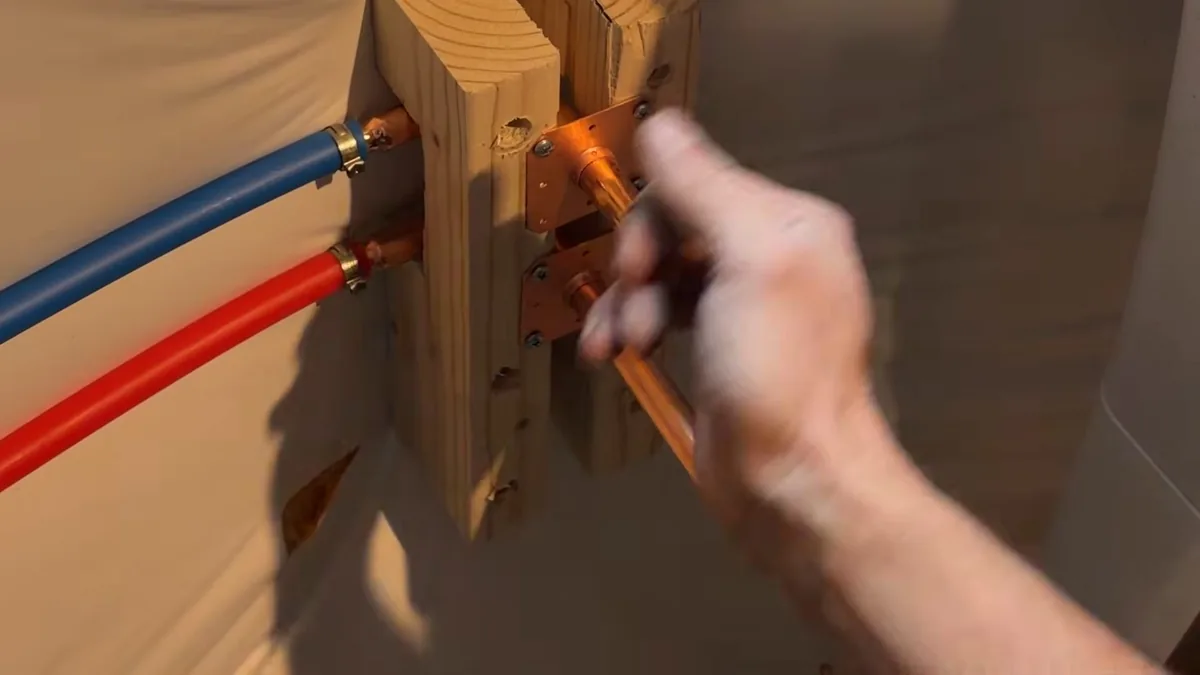
A rough-in is the plumbing that goes in before the walls close: the supply lines, the waste and vent, and the valve. Each is set at the height and position the finished fixture needs.
Getting it right depends on having the actual fixture details in hand. A freestanding tub needs its waste in the floor at a precise spot. A wall hung vanity or a basin with an unusual trap position changes where the waste comes out. Rain heads and body sprays raise the flow the supply has to deliver.
Moving or adding supply and waste lines is permitted work in this county, issued by WSSC Water, and we take care of that permit as part of the job. The inspection happens while the walls are still open, which is the reason the timing with the rest of the renovation matters.
- Choose the fixtures first, and send us the specification sheets or model numbers.
- We mark the supply, valve and waste positions against those sheets on the actual walls and floor.
- Rough-in goes in and is pressure tested before anything is covered.
- Inspection while the framing is still open.
- Walls close and finish. We come back to set fixtures and trim.
Jetted tubs that will not start or run dirty
Jetted tub calls fall into two kinds: the jets do nothing, or they work and push out flakes and discoloured water.
When nothing happens, the first suspects are the electrical side rather than the plumbing: a tripped protective outlet, a failed air switch button, or a pump that has stopped. We can diagnose the pump and the plumbing around it. Wiring faults at the supply are a job for an electrician, and we will tell you if that is where it points.
Dirty water from the jets is a cleaning problem rather than a fault. The piping that feeds the jets holds water between uses, and residue builds up inside it. A purge cycle with a cleaner made for jetted tubs, run with the water above the jets, usually clears it. If it comes back quickly, the pump or its piping may be holding water it should drain.
Where the plumbing stops and the remodel takes over
We take on the water in a bathroom. Everything that carries it, holds it back, or controls it is plumbing work, and that is the scope of this page.
Tiling, plasterboard, cabinetry and the waterproofing membranes behind a tiled wall sit with other trades in most renovations, and we work alongside them rather than instead of them. The useful thing to agree early is the order: plumbing rough-in, inspection, then the waterproofing and tile, then us again for the trim.
If you are planning a full bathroom renovation, bring us in before the layout is fixed. Moving a shower drain a short distance can be simple or difficult, depending on which way the floor joists run. That is much easier to know before the tiles are ordered.
Original bathrooms in older Rockville houses
About half of Rockville's homes were built before 1980, and a good share of those still have a bathroom that has never been fully replumbed. That changes what we look for, without changing what we assume.
In an original bathroom the shut off stops are often the first problem: valves nobody has turned in decades either seize or start weeping the moment they are moved. We replace them as part of any work in the room, because a stop that fails mid job turns a fixture repair into a whole house shut off.
What the pipes are made of is something we find out on the job rather than guess from the build date. Additions and earlier repairs mean two houses on the same street can be completely different behind the wall.
Showers, tubs and what it takes to open a wall
Will fresh caulk stop my shower leaking?
If the water is getting out at the joint between the tub or tray and the wall, or at the screen, yes, and it is the first thing worth trying.
If the flood test shows the shower floor itself losing water, caulk will not reach the problem. The pan underneath has failed, and sealing the surface only hides it for a while.
Do you do the tiling as well?
No. We handle the plumbing in the room and work alongside whoever is tiling. If you do not have someone, we can tell you what the tiler needs from us and when.
Where we have opened a wall or a floor for a repair, we leave it ready for the finish trade rather than patched over.
Can a shower valve be replaced without breaking tile?
Often, if the other side of the wall is a closet, a hallway or somewhere an access panel would not look out of place. That is the first thing we check.
Without back access, the opening comes through the front. It is sized to the valve, and a larger trim plate can sometimes cover it.
How long will the bathroom be out of action?
A reseal or a waste fitting is usually same day. A valve replacement from behind the wall is often a day.
A shower pan replacement is the long one. The floor has to be lifted, the new pan tested, and the tile relaid and cured, which brings in other trades and drying time.
My jetted tub works but the water comes out dirty. Is it broken?
Usually not. That is residue in the jet piping, and a purge cycle with a jetted tub cleaner and the water above the jets normally clears it.
If it returns within a few uses, the pump or its lines may be holding water between baths, and that is worth having looked at.
The fixtures in the room have their own pages
This page is the wet space itself: the shower floor, the tub, the walls around them and the valve buried in that wall. The fixtures you touch every day are handled separately. A dripping tap, a worn cartridge or a tub spout that dribbles during a shower is on faucet and sink repair. Anything about the toilet, including moving one, is on toilet repair.
A slow shower or tub drain is a clog rather than a leak, and that belongs to drain cleaning. If water has already soaked a ceiling or a subfloor, the drying runs alongside the repair on water damage work.
Covered ZIPs: 20850, 20851, 20852, 20853 · Full service area
Stain on the ceiling under a bathroom?
Tell us whether it grows when the shower runs, when the bath drains, or all the time. That one detail points at a different part of the room.