 Rockville MD
Rockville, MD · Leak Detection
Slab Leak Repair in Rockville, MD: Where They Really Happen in a Basement Town
Slab leaks get searched for far more than they happen here, and that is worth saying plainly on a page that sells slab leak repair.
Rockville is a basement market. Most houses in this city have a basement or a crawl space rather than a single poured slab with the supply lines run through it, so the classic sunbelt slab leak is not the default diagnosis. It does happen, in specific places, and this page is about those.
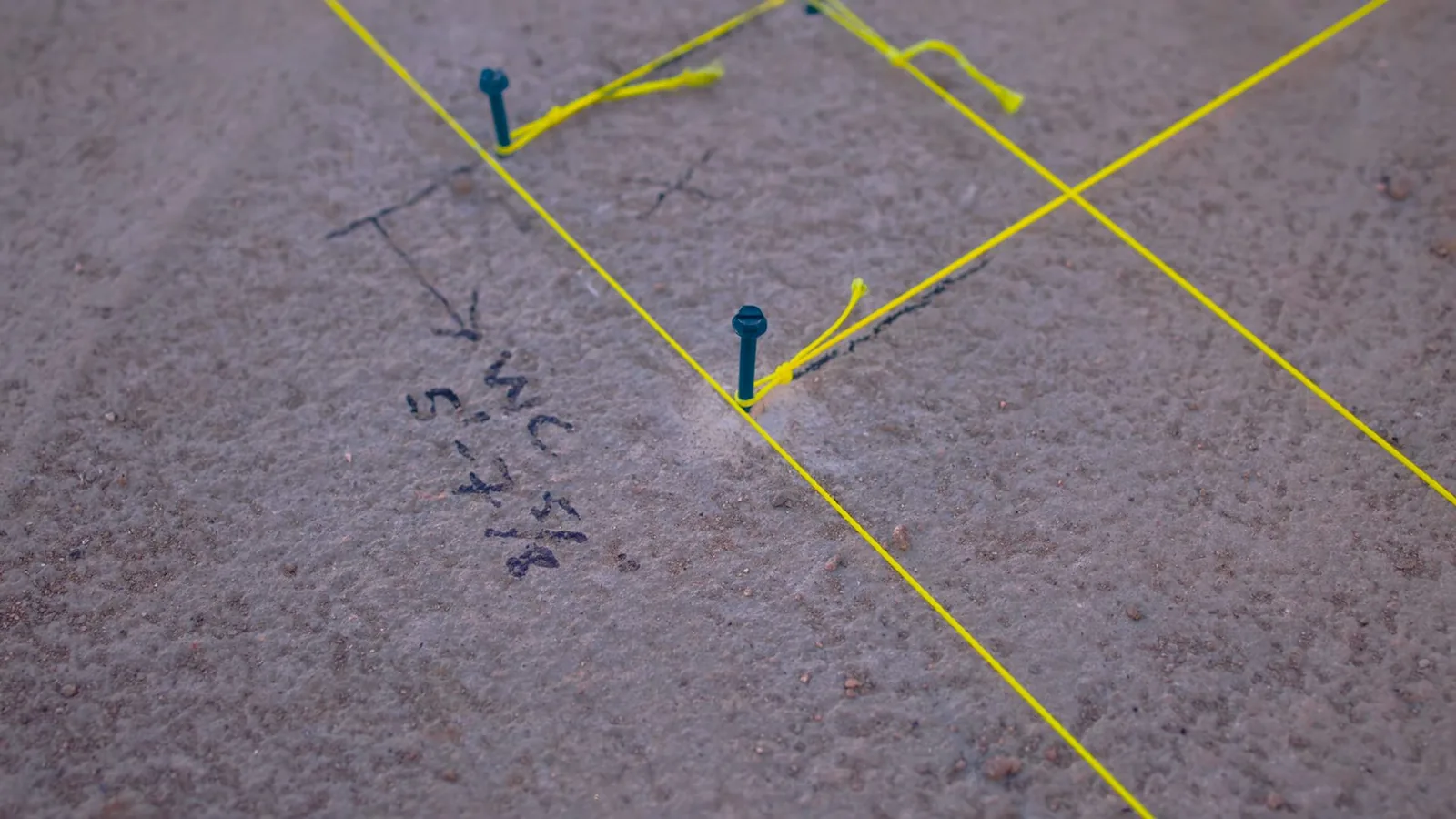
Where a slab leak genuinely happens in a Rockville house
There are four situations locally where water really is moving under concrete, and they are worth knowing because each one has a different answer.
The common thread is that something is running under or through a poured floor rather than being reachable from a basement ceiling. If your supply pipes are visible overhead when you stand in the basement, this is almost certainly not your problem.
- A slab-on-grade addition or sunroom built onto a house that otherwise has a basement
- An attached garage or a converted garage where the supply was run in or under the floor
- A basement floor slab that a line passes through or under, including a sewer or condensate run
- Under-slab radiant heating loops, which leak as a heating fault rather than a plumbing one
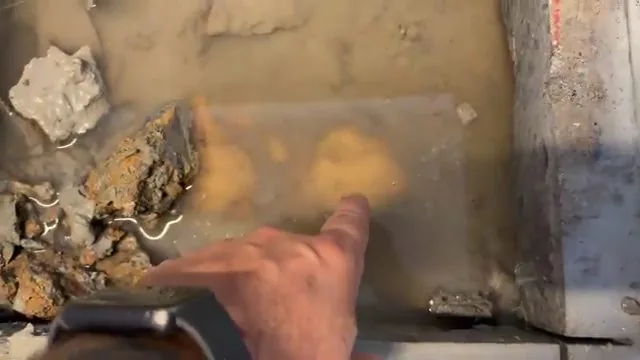
What makes people suspect one, and what it usually turns out to be
The symptoms that bring people to this page are real. They just point somewhere else more often than not, and ruling the simple things out first costs less than opening a floor.
A warm patch on a floor is the strongest single indicator, because it means hot water is running somewhere it should not. The rest of the list is suggestive rather than conclusive.
| What you notice | What it often turns out to be |
|---|---|
| A warm area on a concrete floor | A hot line under or in the slab, or a radiant loop |
| Water bill up with nothing visible | Far more often a toilet flapper or an irrigation valve |
| Sound of running water with taps off | Could be under the floor, could be a service line outside |
| Damp at the base of a wall | Often surface water or a foundation issue rather than a pipe |
| Cracking in a floor slab | Rarely a leak. Montgomery County soils are low shrink-swell |
When a suspected slab leak turns into an emergency
Most suspected slab leaks are slow, and a slow one can wait for a proper locating visit. A few signs mean the situation is urgent, and they are worth knowing before you are standing in a wet room.
- Water showing at the edge of the floor, at the base of a wall or through a crack
- A floor warm enough to feel through socks, or hot to the hand
- A meter that keeps turning with every tap and appliance switched off
- A hissing sound from the floor, or pressure that falls at every tap at once
If you see any of these, close the main shut-off valve first and then call. With the main closed the leak stops feeding the slab, and the call can focus on locating rather than damage. A bill that crept up over two cycles, with none of the signs above, is not an emergency and can wait for a booked visit.
Why the soil story you read elsewhere does not apply here
A lot of slab leak content, including some written for this industry nationally, blames shifting or expansive soil. For Rockville that is simply not supported, and repeating it would mean selling a cause that does not exist.
USDA soil data for Montgomery County puts 80.4 percent of rated acreage at low shrink-swell and only 0.8 percent at high, and every soil series dominant around Rockville sits at the bottom of that range. The ground here is deep, well drained residuum weathered from micaceous schist, with bedrock commonly six to ten feet down.
So when we look for a cause, we look at the pipe, the installation and the water, not at the earth moving under the house.
Locating before breaking anything open
The whole value of this work is in finding the leak accurately enough that only a small area of floor has to come up. Anyone who starts breaking concrete before locating is guessing with your floor.
- Confirm there is a leak at all, by isolating the system and watching the meter
- Separate hot from cold by shutting the water heater outlet and re-testing
- Narrow it acoustically, listening for the signature of pressurised water escaping
- Confirm with thermal imaging where a hot line is involved, or tracer gas where it is not
- Mark the spot, agree the access with you, and only then open the floor
Repair, reroute, or leave it and bypass
Once it is located there are three honest options and they are not equally good in every house. A spot repair opens the floor at the leak and fixes that section, which suits a single failure on an otherwise sound line.
A reroute abandons the buried section and runs a new line through accessible space instead. That often costs less than it sounds, and it removes the possibility of the same line failing again next year. Where a line has already leaked more than once, that is usually the better money.
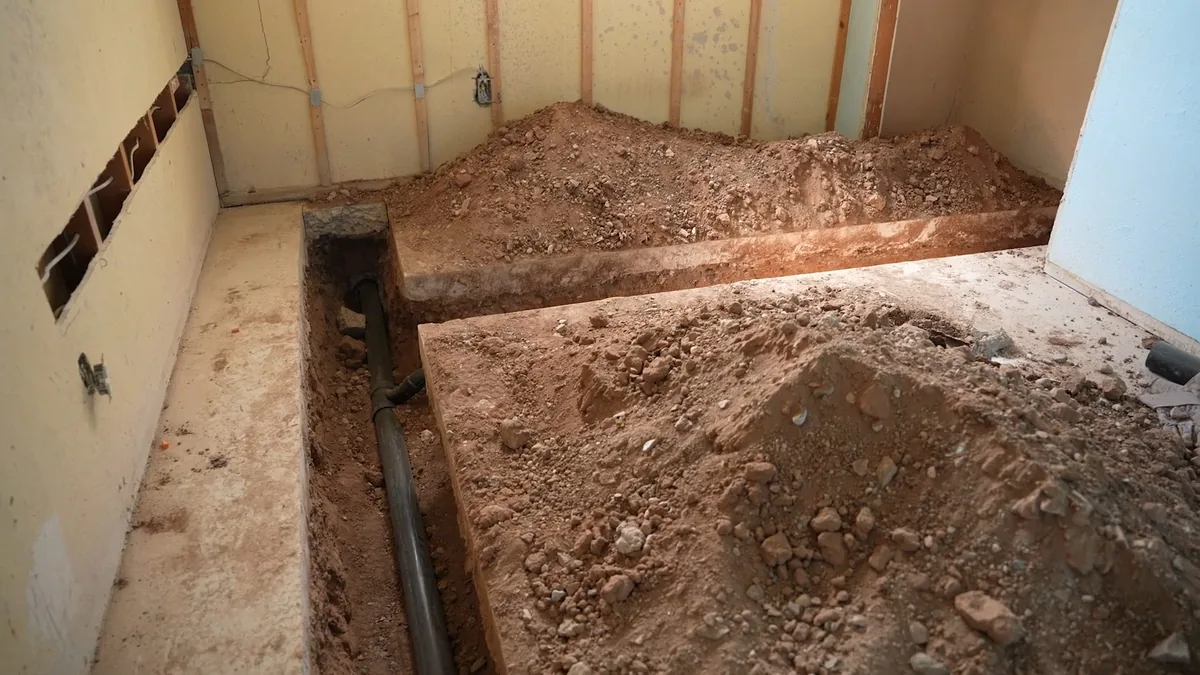
Insurance, and what to photograph before we start
Policies differ enormously on this and we do not advise on coverage. What is consistent is that insurers want evidence of the condition before any work, and that evidence costs you nothing to create and is impossible to recreate afterwards.
Photograph the affected area, the meter reading, and any visible damage before anyone opens anything. Keep our written finding. If there is a claim, the sequence of what was found and when matters more than the repair invoice.
Warm floors and broken concrete: what to expect
My floor has a warm spot. Is that definitely a slab leak?
It is the symptom most worth taking seriously, because it means hot water is moving where it should not be. It is not proof on its own.
Underfloor heating, a nearby flue and a hot line in an adjacent wall can all produce the same thing. We confirm with a meter test before anything else happens.
Do Rockville houses even get slab leaks?
Less often than most people assume, and that is an honest answer rather than a sales one. This is a basement market, so most supply lines are reachable rather than buried in concrete.
Where they do happen it is usually a slab-on-grade addition, a garage, a line passing through a basement floor slab, or a radiant loop.
What does slab leak work cost here?
Detection and a spot repair sit in one range, and a reroute in another, because they are genuinely different jobs. The cost guide sets out both and the factors that move a price inside them.
What changes the number most is access: a leak under an open basement floor is a different proposition to one under a finished room.
Will you have to break up my floor?
Only as much as the located leak requires, and only after it is located. Where the line can be bypassed above the slab, the concrete stays shut and the old run is abandoned in place, which is often quicker and less disruptive than breaking in.
Where we do open the floor, it is one located spot rather than a trench, which is the entire reason the locating step is worth paying for first. We will tell you which we think is right and why before any concrete is touched.
Slab leak work versus leak detection and pipe repair
Most calls that start as a suspected slab leak are really a question of locating. Leak detection is the broader service that covers meter tests, service line leaks and leaks inside walls and ceilings. If the line turns out to be accessible rather than buried, it is usually handled as pipe repair instead.
Where a buried line is best bypassed rather than broken out, the method question moves to no-dig rehabilitation.
Covered ZIPs: 20850, 20851, 20852, 20853 · Full service area
Warm patch on the floor, or a bill you cannot explain?
Say what you are seeing and roughly when it started. We can usually tell you on the call whether this sounds like a slab leak or something simpler.