 Rockville MD
Rockville, MD · Bathroom Fixtures
Toilet Repair and Installation in Rockville, MD: Fix the Fill Valve, the Flapper or the Seal
Toilets fail in a small number of ways, and almost every one of them can be identified before anyone lifts the tank lid.
Running, leaking around the base, flushing weakly, refusing to clear, rocking on the floor. Each of those points at a specific part, and most are repairs rather than a reason to buy a new toilet. When replacement is the better answer, there are a few decisions worth making before the old one comes out.
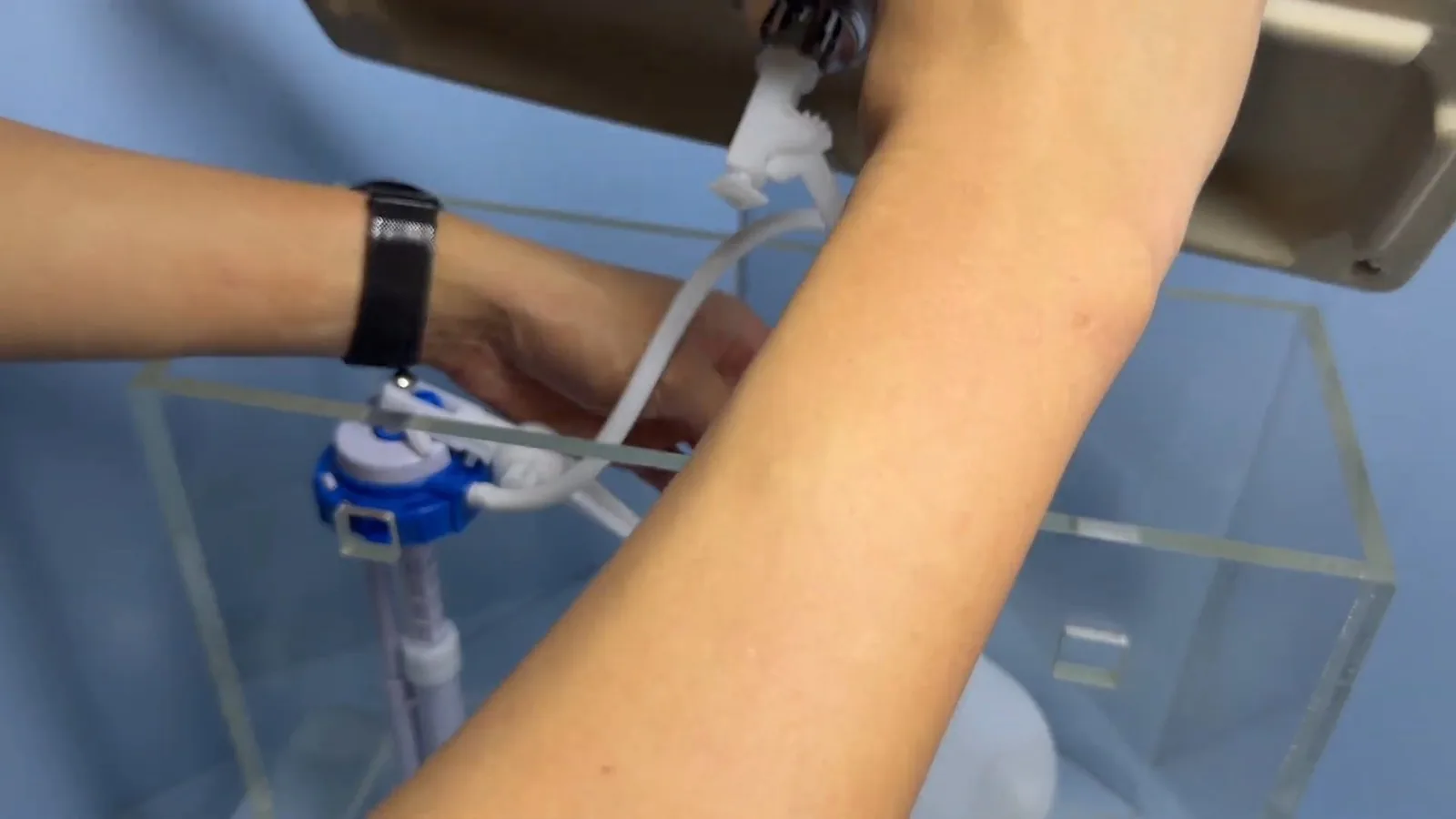
Running, leaking, weak or blocked: what each one points at
Start with what the toilet is actually doing. These are the parts behind each symptom, in rough order of how often we find them.
- Refills on its own every so often, or hisses: the flapper is letting water past, or the fill valve is set too high
- Runs constantly after a flush: the fill valve is not shutting off, or the water level is above the overflow tube
- Water on the floor around the base: the wax ring or the closet flange beneath it, rarely the bowl
- Water on the floor near the tank: the supply line, the shut off stop, or the tank to bowl gasket
- Flushes but weakly: a low tank level, a partial blockage, or mineral build up in the rim jets
- Will not clear at all: a blockage in the trap of the bowl or further down the line
- Rocks when you sit: loose bolts, a damaged flange, or a floor that has softened from a slow leak
The rocking one deserves attention. A toilet that moves breaks the seal underneath it, which leaks, which softens the floor, which makes it move more. Tightening the bolts on a toilet that has been rocking for months can crack the base, so it is worth having looked at rather than forced.
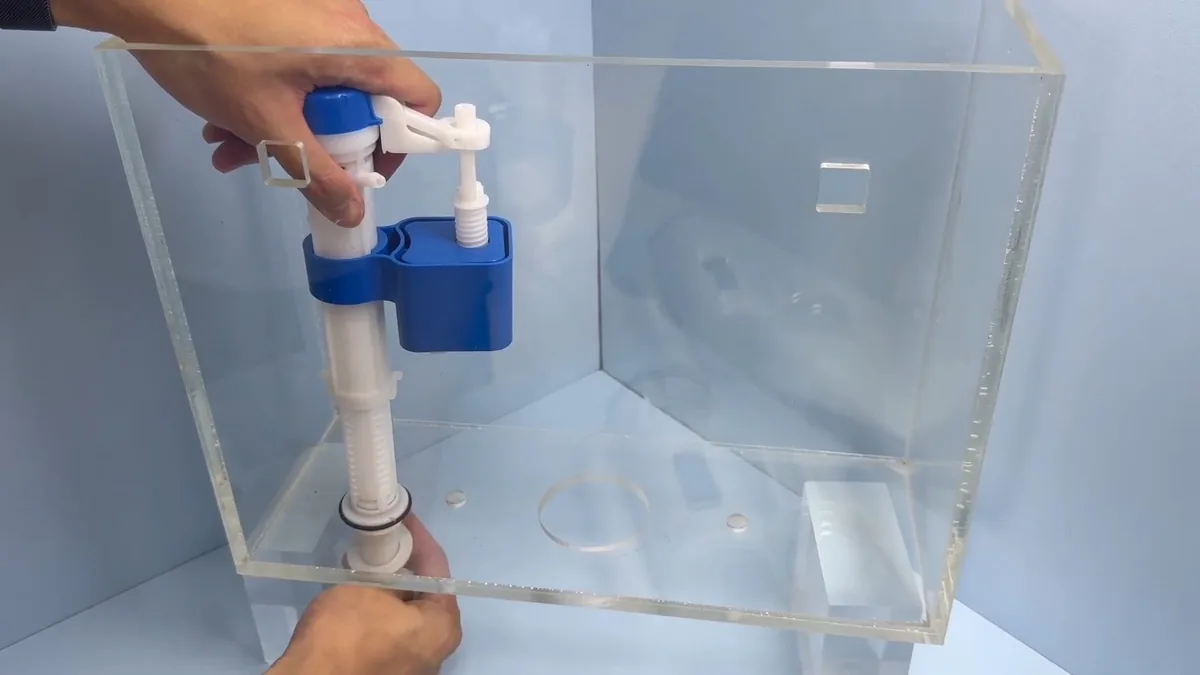
The dye test for a toilet that runs when nobody touches it
A toilet that leaks from the tank into the bowl does it silently and constantly, and it is one of the most common reasons behind a water bill that has crept up. Here is the five minute check.
- Lift the tank lid and check the water level. It should sit below the top of the overflow tube, usually at a mark on the tube itself.
- If it is above the tube, water is spilling straight into the bowl. Lower the float on the fill valve and stop there.
- If the level is right, add a few drops of food colouring to the tank water.
- Do not flush for fifteen to twenty minutes.
- If colour appears in the bowl, the flapper or its seat is leaking.
A flapper is an inexpensive part and often a quick swap. When a new one still leaks, the seat it closes onto is pitted or scaled, and that is where the repair becomes a flush valve rather than a flapper. If the toilet passes this test and the bill is still climbing, the meter test on our leak page is the next step.
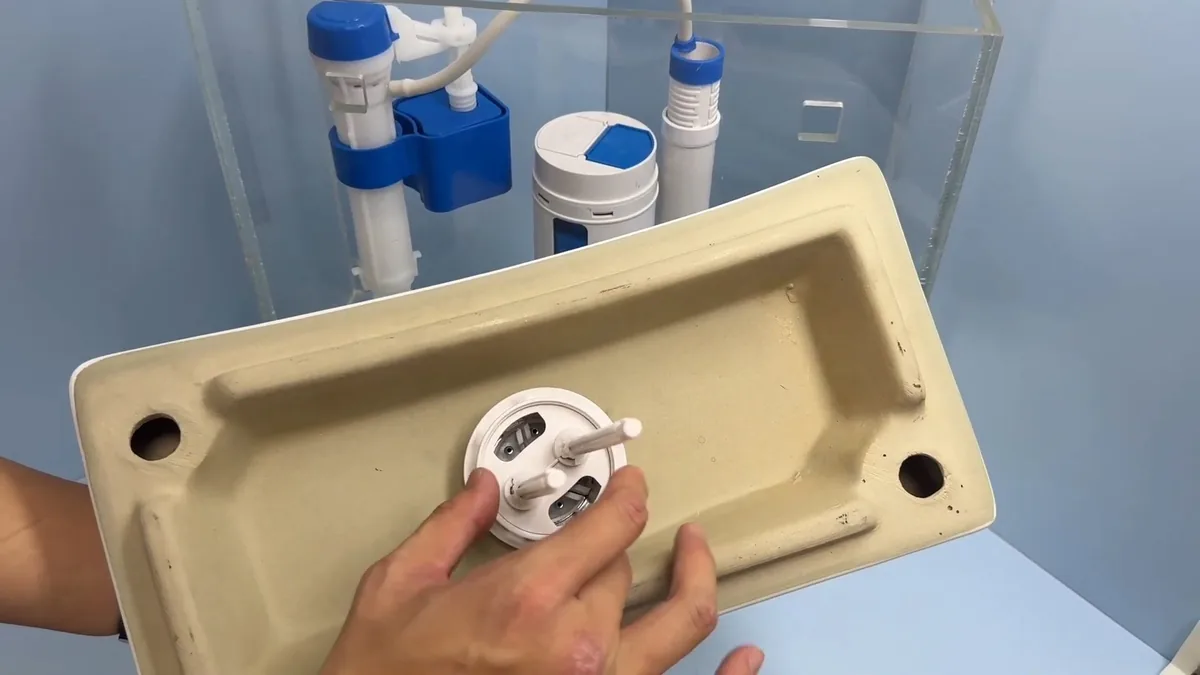
Water around the base: the wax ring, the flange and the bolts
A toilet seals to the drain with a ring, traditionally of wax, pressed between the bottom of the bowl and a fitting in the floor called the closet flange. Water at the base after a flush means that seal has stopped sealing.
Replacing the ring means lifting the toilet, which is a short job when the flange underneath is sound. When the flange is cracked, corroded, or sitting too low because new flooring went down on top of it, the ring alone will fail again, and the flange has to be repaired or raised first.
In a house with a basement or crawl space, it is worth looking up at the floor under the toilet. Staining on the subfloor or the waste pipe below tells you how long this has been going on, and whether the repair needs to include the floor as well as the seal.
A toilet that will not clear
Most toilet blockages sit in the trap built into the bowl itself, within a foot or so of the outlet. A plunger with a proper flange clears many of them, and a closet auger reaches the rest without scratching the porcelain.
What tells you it is not the toilet is everything else. If a bath or a basement floor drain gurgles or backs up when you flush, the toilet is only the highest exit for a line that is blocked further down. Clearing the bowl in that case solves nothing for long.
A toilet that keeps blocking can turn out to have roots behind it. That is the main line rather than the toilet, and it is the point where the work moves to the sewer side.
- Only this toilet, other drains fine: the toilet trap, usually a quick clear
- Toilet plus a nearby basin or bath: the branch it shares
- Lowest fixtures in the house backing up: the main line
- Keeps happening every few weeks: something lodged in the trap, or a line problem worth a camera
Choosing a replacement: rough-in, bowl shape and one piece or two
When replacing makes more sense than repairing, three measurements and choices save a return trip. Removal and disposal of the old toilet is part of the job.
Switching from a round bowl to an elongated one is a common request and usually straightforward, but measure from the front of the bowl to anything in front of it first. An extra two inches is a lot in a small bathroom.
| Decision | What it means | Why it matters |
|---|---|---|
| Rough-in distance | Wall to the centre of the floor bolts, usually 12 inches, sometimes 10 or 14 | A toilet bought for the wrong rough-in will not fit the space or the drain |
| Round or elongated bowl | Elongated is longer and more comfortable for most adults | Check the door swing and clearance in a small bathroom |
| One piece or two piece | One piece has the tank and bowl moulded together | Easier to clean and no tank gasket, but heavier and pricier to replace |
| Seat height | Standard or a taller comfort height | Taller suits many adults and anyone with knee trouble |
Flush volume, and what an original toilet uses
Toilets made for the US market since 1994 are limited by federal law to 1.6 gallons per flush. Models carrying the EPA WaterSense label go further, at 1.28 gallons or less.
Toilets older than that standard commonly use far more per flush. With a large share of Rockville's houses predating it, an original toilet is still a real possibility, and replacing one is among the more worthwhile water savings in a home.
Low flush volume only helps if the toilet still clears in one go. A well designed modern bowl does. If a newer toilet routinely needs two flushes, that points at a partial blockage, a low tank level, or rim jets narrowed by mineral deposits from moderately hard water, all of which are fixable.
Bidet seats and smart toilets
Electric bidet seats and integrated smart toilets come up regularly in the calls we take, usually for maintenance rather than new installs.
The plumbing side is simple: a tee at the supply stop feeds both the tank and the seat, and many units have a small inline filter that blocks over time and reduces the spray. That filter is often the whole repair. Branded seats and integrated units take their own parts, so the make and model matters before the visit.
The power side needs a protected outlet within reach of the toilet. If your bathroom does not have one, that is an electrician's job, and it is worth arranging before the seat arrives.
Moving a toilet to a new position
Relocating a toilet is the most constrained change in a bathroom layout, and it is worth understanding why before planning around it.
A toilet needs a large waste pipe, laid at a steady fall to the stack, and a vent. Moving it a short distance in the direction the floor joists run is often simple. Moving it across the joists means notching or rerouting around structure, and that is where it gets expensive or impractical.
On an upper floor the route runs between the joists. In a basement the waste usually sits under a concrete floor, so moving it means cutting and patching the slab. Both are permitted work through WSSC Water. Ask early, before the layout is drawn, and we can tell you which positions are easy and which are not.
Flappers, wax rings and new bowls
Can I replace a flapper myself?
Usually, yes. Shut the stop behind the toilet, flush to empty the tank, unhook the old flapper and fit one that matches the flush valve size, which is commonly 2 or 3 inches.
If the new flapper still leaks, the seat underneath is the problem. That is a flush valve job and worth handing over.
How long does a wax ring last?
A wax ring that is not disturbed can last for many years. What shortens its life is the toilet moving, which is why a rocking toilet tends to leak at the base.
Every time a toilet is lifted, for a floor or a blockage, the ring is replaced. They are not reusable.
My toilet flushes weakly. Do I need a new one?
Rarely. Check the tank water level first, then look under the rim with a mirror for blocked jets. Mineral build up there slows the flush, and it can be cleared.
A partial blockage in the trap also weakens the flush without stopping it completely. Replacing the toilet is the last answer, not the first.
Why does my toilet run on its own when nobody has flushed it?
Almost always the flapper is not sealing, or the fill valve is letting the tank creep past its level. Water slips into the bowl, the level drops, and the valve tops it up again.
Put a few drops of food colouring in the tank and wait twenty minutes without flushing. If colour reaches the bowl, the flapper is leaking. If the tank water is touching the overflow tube, the fill valve needs adjusting or replacing.
Is it worth repairing an old toilet?
If the porcelain is sound and the repair is a flapper, a fill valve or a seal, usually yes. Those parts are standard.
If the toilet predates the 1994 flush limit, uses far more water than a modern one, and also needs work, that is the case where replacing it tends to pay back.
Water keeps appearing around the base, but only sometimes. What is it?
If it appears after flushing, it is almost always the seal at the floor. If it appears on humid days without anyone using the toilet, it may be condensation on a cold tank.
Dry the floor and put down a sheet of paper towel. Where it gets wet, and when, tells you which.
When the toilet is only the symptom
If the toilet backs up and a bath or a floor drain gurgles at the same time, the problem is the line the toilet drains into rather than the toilet. That is cleaning the branch drain for a branch, and sewer line repair where the main is the issue.
The rest of the bathroom has its own pages. Shower and tub leaks into the structure are on bathroom wet-space work, and the basin taps on basin tap repair.
Covered ZIPs: 20850, 20851, 20852, 20853 · Full service area
Toilet running, rocking or refusing to flush?
For toilet repair & installation Rockville, MD, say which problem it is, and whether any other drain in the house is acting up too. That second answer changes the job.